
Parshat Korach:
Parshat Korach: Hashem settled the debate for eternity
Moshe understood that this effort on the part of Korach in reality stood to undermine the entire Torah
Moshe understood that this effort on the part of Korach in reality stood to undermine the entire Torah
We can glean from the sacrifice of the day a poignant perspective as to how to relate to the learning of the Torah.

The Torah commentator, the Alshich Hakadosh, bothered by this very issue, offers, that Shemittah astoundingly serves as the rebuttal to the claims of the Jew-haters and fools that sneer at our right to the land of Israel, and claim that the land of Israel was stolen by the Jews.
The Rokeach [and Nachal Kedumim] point out, that Yitzchak lived one year for each hour of his existence until Avraham circumcised him-thus, he lived 180 years.
We can suggest that the foundation of the entire Torah rests on the declaration of pure and simple faith that we proclaim twice a day—“Shema Yisrael, Ad-onai Elo-henu Ad-onai Echad”, which, when done properly, empowers the Jewish people to defeat the machinations of the Yetzer Hara.
We, with the benefit of hindsight, can only be in awe of the divine revelations that were expressed by our great commentators, and how accurately history has borne out the events that were foretold in their writings.
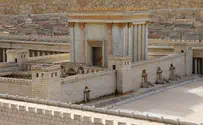
Although we currently are lacking the Beit Hamikdash, we still have the beauty and joy of Shabbat to invigorate our souls.
The most critical lesson of Purim that our generation can take from the story of Esther is the need for Jewish Unity, above all else.

In our generation, and those immediately prior, we can note similarities to the Purim story

A unique perspective on the Parsha offers a further glimpse into the depravity that is the International Courts
The entirety of the splitting of the sea was in the merit of Yoseph, and the sacrifices that Yosef made.
In order to become a “convert”, a National Identity must be established.
The Neshamot of the Shevatim accompanied and shielded their descendants during the teeth of the Egyptian exile.
One can not help but thank G-d for the Jewish homeland which preserves our status as a “Great Nation”.
This week’s Parshah continues the story of Yosef, and his rising from the ashes of an Egyptian prison to the rank of Viceroy, second only to Pharaoh
The explanation of Yaakov’s vision can provide much poignancy vis-a-vis a future episode in Yaakov’s life–namely
G-d lets Yitzchak know that the land of Israel will belong to the incredibly numerous heirs of Avraham and Yitzchak and eventually Yaakov, because of the fact that Avraham followed the entirety of G-d’s commandments
The Sefer Tifferet Yehonasan [Bereishit 18’ 33’] offers, that in reality, Avraham’s prayers and efforts to save the wicked people of Sodom did not go unreturned
It seems that the theme of these observations of Rashi is that G-d can be said to be willing to forgo His honor; it is only when interpersonal relationships break down and antisocial behaviors reign supreme that G-d feels that the fabric of society and creation is being torn down.

The Midrash details how Iyov could not understand his life of extreme suffering, until he was able to comprehend the mitzvah of sukkah. This comment of the Midrash begs for an explanation, as the logic that would explain a connection between Iyov’s suffering and the mitzvah of building a sukkah is glaringly missing.

The highlight of the Yom Kippur service in the time of the Beit Hamikdash was the High Priest entering the Holy of Holies, in special white garments, as the representative of the Jewish people. The Mishnah states that it was the most intimate of moments between the man representing the Jewish Nation and Hashem Himself.
As much as we are bound by our ancestors declaration of allegiance to G-d and the Torah, our generation is now bound to educate and inspire our own descendants to follow the proud path of Judaism.
Rabbi Soleveitchik suggests that the bringer of the first fruits should not declare his gratitude for the salvation of Yaakov from Esav, because there are still lingering, and often painful, impacts of that exile.
Apparently, as explained by Rashi, the Jewish army was commanded not to engage in total warfare; even against immoral nations, the humanity of the Israelite army required that we would not act as total savages, and therefore, effort must be made to preserve the fauna of a city that the Jews were attempting to destroy.

The Torah presents these two choices as “Either\or.” No middle ground is volunteered.
Judaism has, at its core, a series of threes. There are three different divisions within the broader framework of the twelve ancient Judaic tribes.
All misdeeds are rooted in a certain momentary lack of awareness of the reality of Hashem, which allows for sinful behavior to fester and actualize
The cause and instigator of the sin were the Midianites, and therefore, as the impetus for the sin, they faced more blame than the people of Moab, and G-d’s wrath was directed at them.

'Moshe and the elders could not recall the proper response to the display of immoral conduct; his great-nephew Pinchas was able to clarify the issue, and speared both Zimri and Kozbi as befitting those who blatantly defame G-d's Name with extreme displays of lewdness.'
The Hebrew words for “A Nation that dwells apart” numerically result in the value of 420, which is the same value as the Hebrew phrase for “The days of Messiah"
Korach and his cohort fail spectacularly and are swallowed by the earth while yet alive. We can glean from this incident the significance of comprehending that the Torah was given through Moshe, by the direct orders of G-d.

'When the Written Torah will be translated into the secular tongues, and the nations of the world will claim that they received the Torah from G-d and are the chosen religion, the Jewish response to prove the veracity of our claim as the one true religion will be that we have the Oral Torah, which contains the deeper understandings of the written Torah.'

Rashi seems to be talking directly to our generation, for while we have merited to recreate a prosperous Jewish homeland in our ancient territory over the last 75 years, that victory is hard to truly celebrate when faced with the struggles that have accompanied the birthpangs of our nation's third Genesis in Israel.

Chinuch explains that if one is allowed to defend their physical property to the fullest extent of the law, for sure when facing verbal abuse and threats to one’s emotional and spiritual health one can respond in kind.

While the practice of Molech is no longer en vogue in today’s world, the metaphoric pillars of fire that youngsters pass would through in worship of this barbaric deity still burn strong in the halls of 'prestigious' universities.

It appears that the ability of the Jews to take the pagan representation of the Egyptian society in full view, and prepare it for sacrifice 4 days later, may have been a greater miracle than anything that had occurred up until that moment.
For while we have fought for and earned the Land of Israel, and the practice of Jewish life has returned to Zion, we cannot say that our Jewish brothers and sisters in Israel are truly free.

Aharon's sin with the Golden Calf was not in its creation but in forcing G-d to judge the Jews as willful sinners.
Yaakov did not cease his studies of the 613 Mitzvot, and when one learns about a Mitzvah, credit is given for actually fulfilling that commandment!

R’ Moshe Feinstein asks the obvious – if G-d’s voice was to be heard by Moshe alone, why does the Torah allude to the might and majesty of G-d’s communications? What purpose was served by this miracle?